


Thai vegetables, herbs and ingredients
Thai food tastes unbelievably good! Almost everything we enjoy on vacation can also be enjoyed at a Thai restaurant back home in Germany, or even cooked ourselves. You can find most of the ingredients at the Asian grocery store around the corner.






Uses in Thai Cuisine
Winged bean / ถั่วพู (Thua phu)
When sliced, winged beans look like a large X. They have a mild flavor and are used in Thai salads, or simply enjoyed with chili pastes such as the famous nam prik. Find the recipe for winged bean salad, yam tua puu, here!
Long eggplant/ มะเขือยาว (Makua Yao)
Slightly sweet and aromatic. If they’re too long, they taste bitter. Delicious in a green curry, or fried like the eggplants in the video.
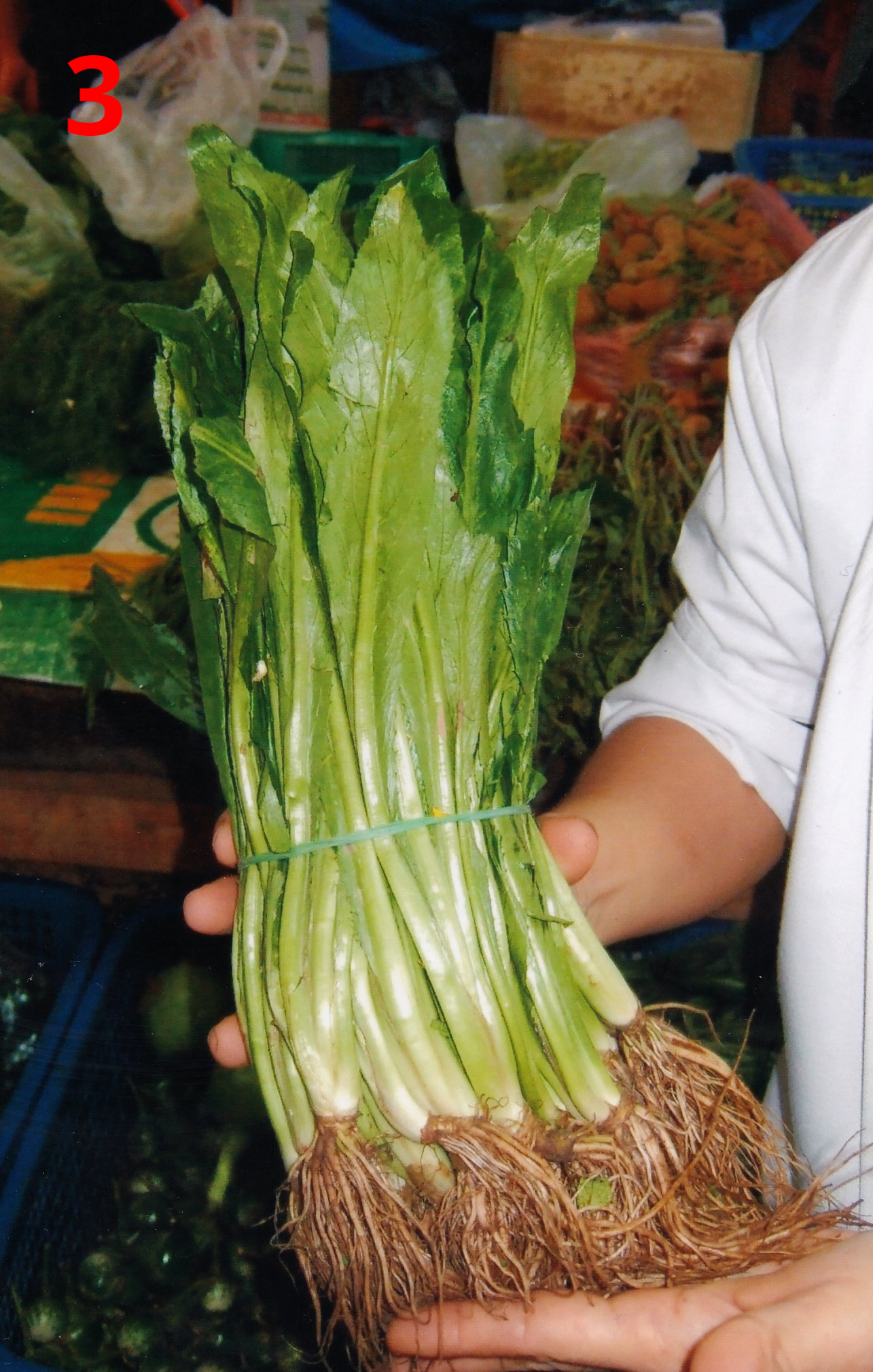
Long Coriander (Pak Chi Farang) | Culantro
The leaves are used in many soups for their spicy aroma, as well as in dishes made with coconut milk. Unlike regular coriander, they release their aroma for longer, so they can be cooked a little too. They’re best used fresh, but can also be frozen (with only a slight loss of aroma).
Acacia shoots (Cha Om) | ชะอม
In Central Thailand and Isaan, the shoots are mainly fried or boiled. In Northern Thailand, they are usually eaten raw.
Cooked
They are cooked as a vegetable and used in soups, stews, scrambled eggs, and Thai omelets. Once cooked, they lose their pungent smell and taste delicious and exotic.
Fried and steamed
In Thai cuisine, the young shoots are used like leafy greens. They are stir-fried or steamed. The vegetable tastes bitter and garlicky.
Chinese bitter melon (Mara Jean)
ะระจีนม – Bitter melon
It is harvested green because it tastes too bitter once it turns yellow. Bitter melon is popular in Thai cuisine, but it is also used as a medicinal plant (for kidney tea). If it tastes too bitter, you can briefly boil it in salted water and then rinse it thoroughly. It is used in salads and curries.
Coriander (ผักชี Phakchī)
Coriander is one of the most important herbs in Thai cuisine and has become popular here too. You can find it in Asian grocery stores as well as at many farmers’ markets. Since it isn’t always easy to find fresh, it’s worth freezing the leaves and so on.
Lemongrass
ตะไคร้ (Takhrai; Da cry) and galangal / Thai ginger (Kha) | ข่า – Galangal
Lemongrass
In Thai cooking, the white lower parts of the lemongrass stalk (10–15 cm) are used. First, cut them into small pieces and pound them firmly with a mortar and pestle until the juices are released. Then simply cook them in sauces, soups, or other dishes. They add a delicate lemony aroma. The lemongrass pieces are not eaten; just leave them on your plate.
Thai ginger (galangal) has a sharp taste with a slight hint of lemon. Galangal is used extensively in Thai cooking. In Thailand, fresh galangal is always used, sliced very thinly. The slices are used in curry pastes, soups and many wok dishes.
Galangal keeps in the fridge for up to three weeks.
Water mimosa (Pah Kah Ched)
It has a slightly bitter taste. It is often stir-fried with ingredients such as minced meat, but is also served on its own as a vegetable.
Especially popular: the well-known Thai Spicy Water Mimosa Salad (Yum Pah Kah Ched)
Dried shrimp (Kung Haeng) | กุ้งแห้ง
In Thailand, they're available in various colors, sizes and grades. The best quality is usually bright red shrimp. The redder, the better.
Bamboo shoots
Bamboo shoots (No mai; Naw mai)
These young shoots are very large and are harvested mainly during the rainy season. They are very high in fiber and are added to many dishes, such as curries. They must not be eaten raw!
Thai Chilli
พริกขี้หนู (Prik khi nu; Pick ke new)
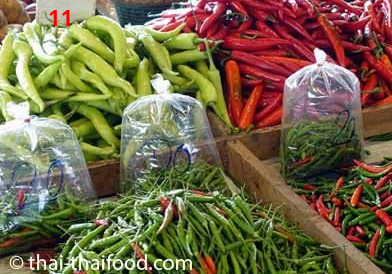
Thai cuisine uses yellow, red and green bird’s eye chilies. Many people who prefer milder heat favor the yellow ones. Red and green chilies are simply at different stages of growth. They’re hottest when green. As the fruits ripen, they turn red—and become milder! Chilies are one of the main ingredients in curry pastes. Green curries are the hottest. Red curry paste is often made with dried chilies. Thai restaurants outside Thailand use chilies sparingly because they know local diners’ preferences. In Thailand, always ask for your food to be less spicy when you order!
Water morning glory
Morning glory (Pak Boong; Phak bung)
In Thailand, the larger variety (Phak bung chin) is usually stir-fried or eaten in soup. Phat Phak Bung Fai Dang (ผัดผักบุ้งไฟแดง่) is a popular Thai dish made with water spinach, garlic, chilies, soy sauce, and oyster sauce. The smaller variety (Phak bung na) is usually served raw with som tam or nam phrik. Morning glory is my absolute favorite vegetable! Sadly, I haven’t found it in Asian grocery stores here yet:(
Kaffir lime leaves
ใบมะกรูด (Bai makrut)
The leaves can be used fresh or dried and stored frozen. Its hourglass-shaped leaves (consisting of the leaf blade and a flattened, leaf-like petiole or leaf stalk) are commonly used in Thai and Lao cuisine in dishes such as Tom Yum Goong.
Thai eggplant
มะเขือเปราะ (Makhuea pro; Ma koo a praw)
In Thailand, they are usually purple, green, yellow or white. They are generally quartered and added to curry dishes. A brief boil softens them and lets them soak up the dish’s wonderful flavors.
Thai sweet basil
Thai basil (Horapha; Ho ra pa)
Sweet Thai basil tastes strikingly different from the kind we have at home! It has a slight sweetness with a hint of anise. It’s added to many dishes shortly before serving, such as various curry dishes.
Straw Mushrooms (Hed Fang) | เห็ดฟาง
In Thai cuisine, straw mushrooms are used in soups, stir-fries, braised dishes and many other recipes. For example, in the famous Tom Kha Gai or Tom Yam Goong. Since they have a mild flavour, you can use them much like button mushrooms.
Coriander (ผักชี Phakchī)
Coriander is one of the most important spices in Thai cuisine and has become popular here, too. You can find it in Asian grocery stores and at many farmers' markets. Since it isn't always easy to find fresh, it's worth freezing coriander.
01
Coriander
leaves
Leaves – the mildest in flavour. Add just before serving.
02
Coriander
stalk
Stems — strip off the leaves, then flatten with a knife. They add more flavor to the dish than the leaves. They can be removed at the end of cooking.
03
Coriander
Root
The root has ten times the flavor of the leaves! It’s best for seasoning! Unfortunately, it’s often cut off before sale, both at local markets and in many Asian grocery stores. Essential for making your own fresh curry paste!!